

I don’t know about you, but personally, I think that reading good books helps feeling better about life and its unpredictability. And as usual, I wish to offer 5 suggestions to start the New Year with some positivity. I will explore leadership, productivity, fiction, and a couple of other genres to make my list as varied as possible. Here we go!
- LEADERSHIP – Simon Sinek’s “Leaders Eat Last”
Simon Sinek is one of my favourite authors. What I like the most about him is his down-to-earth demeanor and approach. To me, humanity in leadership is an essential trait and one that true leaders must have.
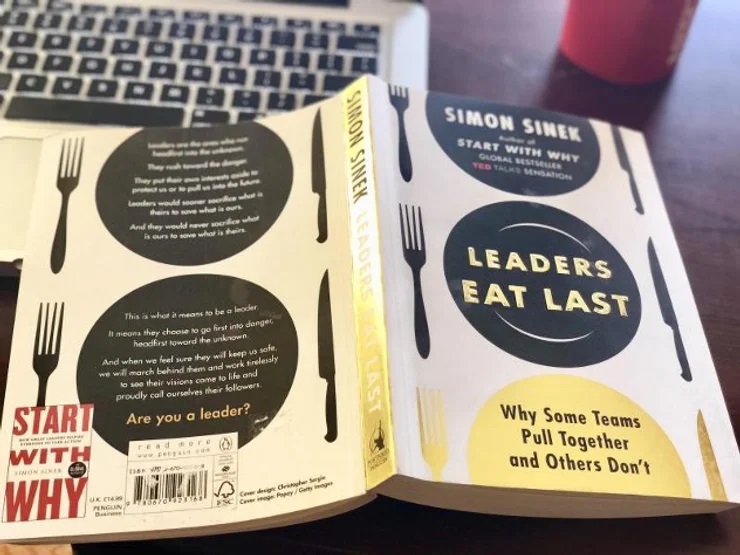
In “Leaders Eat Last,” Simon Sinek argues that true leadership is about creating a “circle of safety” within an organization. The key ideas can be summarized as follow:
- There is a Primal Need for Safety: Sinek draws on evolutionary biology, explaining that humans have an innate need for safety, stemming from our ancestral past. This need extends beyond physical security to include emotional and psychological safety. Such a concept takes me back to my impression on Sinek’s humane approach style. It comes natural to him and shows that one can trust him. It is the typical “walk-the-talk” approach.
- The Leader’s Role is Twofold: Sinek emphasizes that leaders have a crucial responsibility to prioritize the well-being of their team members. This involves:
- Protecting the team from external threats, including anything from competitors to economic downturns. And
- Eliminating internal threats, which he refers to things like fear, mistrust, and unfair treatment within the organization.
- Building Trust: Sinek argues that trust is the cornerstone of a successful team. When team members trust each other and their leader, they are more willing to take risks, collaborate effectively, and achieve extraordinary results.
- Leading by Example: Sinek finally emphasizes that leaders must demonstrate their commitment to the well-being of their team through their actions. This includes prioritizing the needs of others, showing empathy, and being willing to sacrifice for the good of the group.
Sinek’s powerful metaphor is that true leaders put the needs of their team before their own. Just as in a pack of wolves, the alpha male ensures that all members of the pack are fed and safe before he eats.
In other words, “Leaders Eat Last” is a powerful reminder that effective leadership is not about power or domination, but about creating an environment where people feel safe, valued, and empowered to thrive. And in today’s organizations, this is becoming more and more critical.
2. FICTION – Cixin Liu’s “The Three-Body Problem”
Also a major Netflix show that was recently renewed for the second season, “The Three-Bod Problem” is a captivating, intriguing, and mid-bending science fiction novel that tells the story of humanity’s first contact with an alien civilization.
The story begins during China’s Cultural Revolution, where a young woman named Ye Wenjie witnesses the brutal persecution of her scientist father. This traumatic experience leads her to despair and a desire for revenge against humanity. She eventually participates in a secret military project that seeks to contact extraterrestrial life. Her signal is intercepted by an alien civilization on a planet orbiting a chaotic three-sun system, making their lives unpredictable and brutal.

The aliens, known as the Trisolarans, are on the brink of extinction due to the chaotic nature of their planetary system. They see Earth as a potential new home and begin planning an invasion. At some point, a secret organization is formed on Earth dedicated to helping the Trisolarans conquer humanity. They believe that humanity is a flawed and destructive species that deserves to be replaced.
“The Three-Body Problem” explores profound themes such as the nature of civilization, the impact of technology, and the search for meaning in a chaotic universe. It’s a complex and thought-provoking novel that has garnered critical acclaim worldwide. A true hot read!
3. PRODUCTIVITY – Tiago Forte’s “Building a Second Brain”
If you are looking to improve your productivity and be more effective in what you do, then you must read “Building a Second Brain” by Tiago Forte. This book explores the concept of creating a digital system for organizing and retrieving information, essentially an “external brain” that augments your own cognitive abilities.
Forte argues that our biological brains are best suited for creative thinking, generating ideas, and making connections. By offloading the burden of storing and retrieving information to a digital system, we free up cognitive space for higher-level thinking. To do this, we need to use what he calls the CODE Method, or, in other words:
- Capture: Gather information from various sources (articles, books, conversations, etc.) and store them digitally.
- Organize: Structure the captured information using a clear and intuitive system. Forte uses what he calls the PARA system:
- Projects: Ongoing tasks and initiatives.
- Areas of Responsibility: Domains of your life (work, health, relationships).
- Resources: Reference materials, tools, and information assets.
- Archives: Completed projects, outdated information, and inactive areas of responsibility.
- Distill: Process and summarize information, extracting key insights and connections.
- Express: Share your knowledge and ideas through writing, presentations, or other creative outputs.
Forte asserts that the practice of Building a Second Brain can lead to increased productivity, improved creativity, enhanced memory, and a deeper understanding of complex topics. However, the key concept here is that this is not about simply storing information, but about creating a dynamic system that allows you to easily access, connect, and utilize your knowledge to achieve your goals. I have used it and it is quite powerful.
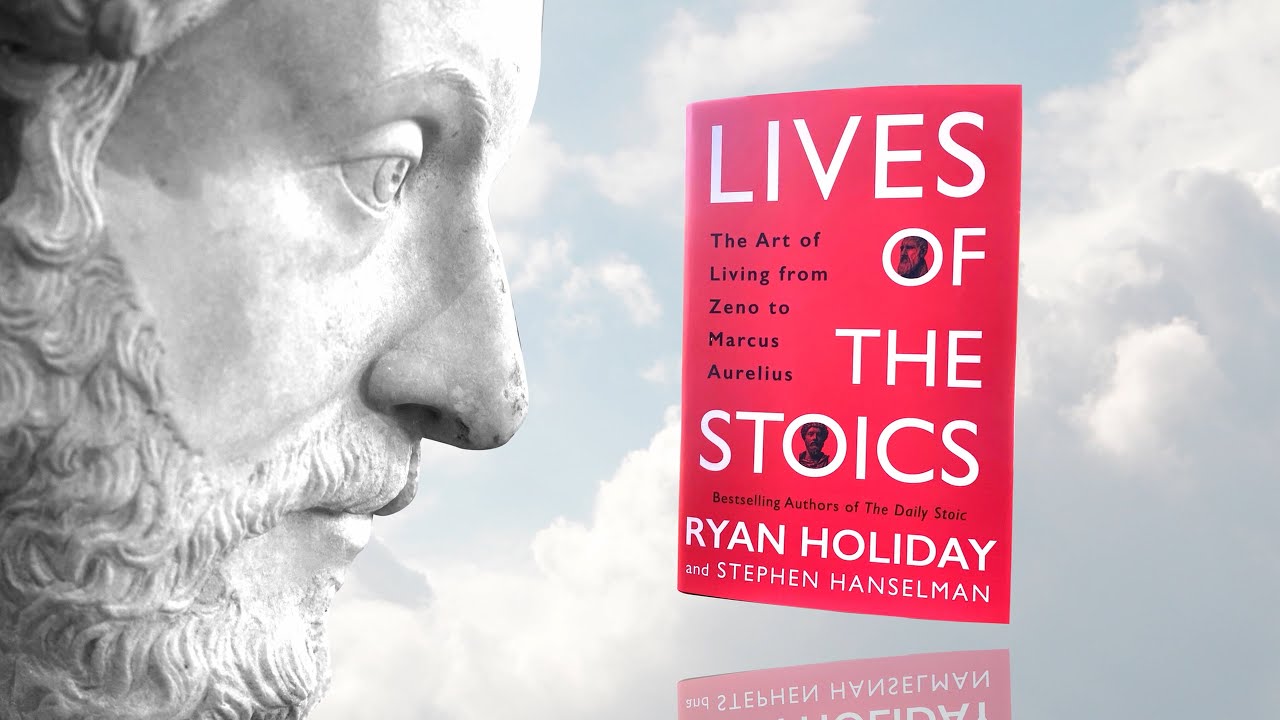
4. PHILOSOPHY – Ryan Holiday’s “Lives of the Stoics”
You have probably heard of the Roman emperor Marcus Aurelius. You may also know that he was a practician of Stoicism, the philosophy of the down-to-earth life. He even wrote a series of thoughts and reflections that are now collected in a popular book titled “Meditations.”
“Lives of the Stoics” by Ryan Holiday is a collection of short biographies of prominent Stoic philosophers, including Zeno of Citium, who was the founder of Stoicism, and emphasized virtue, reason, and living in accordance with nature; Epictetus, a former slave who became a renowned Stoic teacher, emphasizing inner freedom and focusing on what we can control; Seneca, a Roman statesman, philosopher, and playwright who advised Roman emperors and wrote extensively on Stoic ethics and living a virtuous life; and, of course, Marcus Aurelius.
The central concept of Stoicism is virtue, which encompasses wisdom, justice, courage, and temperance. But reason (the ability to use logic to understand the world and navigate challenges), focus on the present (recognizing that the only thing we truly control is our own thoughts and actions in the present moment), acceptance of what we cannot control (acknowledging that many things in life are beyond our control and learning to accept them with equanimity), and living in accordance with Nature (understanding and embracing the natural order of the universe) are also the main themes of this ancient, yet modern philosophy.
I really like the “Lives of the Stoics” because it brings the philosophy of Stoicism to life by presenting it through the lives and teachings of its most influential figures. It offers valuable insights into how to cultivate inner peace, develop resilience, and live a more meaningful life in the face of adversity.
A great read!
5. SPRITUALITY & MINDFULNESS – Paulo Coelho’s “The Alchemist”
Finally a book that I read many years ago but comes back to me very often. “The Alchemist” by Paulo Coelho tells the story of Santiago, an Andalusian shepherd boy who dreams of traveling the world in search of a worldly treasure.
Santiago has a recurring dream about finding a treasure at the Egyptian Pyramids. He consults a Gypsy woman who interprets the dream as a prophecy. Encouraged by the Gypsy woman and later by Melchizedek, an enigmatic alchemist, Santiago embarks on a journey to Egypt. He faces numerous challenges along the way, including losing his money, working as a shepherd for an Englishman, and crossing the vast Sahara Desert. Throughout his travels, Santiago learns valuable lessons.
“The Alchemist” is a beautifully written and inspiring story that has resonated with millions of readers worldwide. It’s a timeless tale about self-discovery, courage, and the power of pursuing one’s dreams. Reading Coelho is mesmerizing, but I believe “The Alchemist” is definitely his masterpiece.
I hope you will enjoy reading these books and I wish you the best in 2025.
To the next!
adf
 ASD Innovation
Leave a comment