

As I have done for the last few years, I share the 5 favourite books I have read in 2022. Reading has been and will continue to be a great companion and a wonderful tool to launch me into a universe of knowledge, emotions, and introspection, which greatly assist me to walk my life path with more overall serenity. Here we go!
1 – The Obstacle Is the Way by Ryan Holiday – Ryan Holiday has become one of my favourite authors in the last few years. He is an entrepreneur and influencer who has embraced Stoicism as a philosophy of life and has written 14 books on the subject. An eclectic and wise individual, he also owns a bookstore and reads between 50 and 100 books a year.
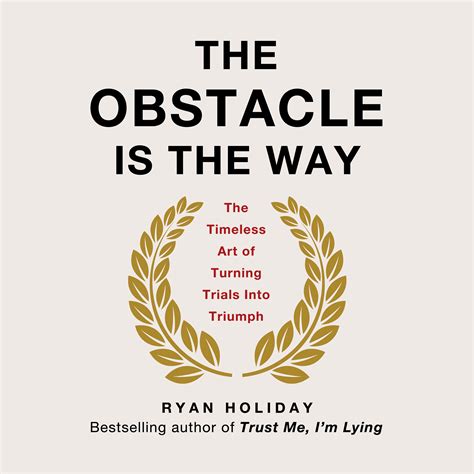
In “The Obstacle Is the Way,” the main theme is that obstacles are not something to fear but true opportunities that can change our lives. In a stoic and pragmatic way (two qualifiers that can be interchangeable, by the way), Holiday describes three main points that influence us when obstacles come our way: a) Perception – too many times we see things not as they are but as we perceive them. By seeing things in a neutral way, we become more objective about them and are able to define more logical responses to situations; b) Action – and by this, it is meant the right action, or better, the directed action. So, there is an explosion, metaphoric or otherwise. Are you the guy running toward it? Or running away from it? Or worse, are you paralyzed and doing nothing? This little test of character says everything about us; and c) Will – Will is our internal power, which can never be affected by the outside world. But that needs to be cultivated. In actuality, the will has a lot more to do with surrender than strength, Try “God willing” over the “will to win” or “willing it into existence,” for even those attributes can be broken. True will is quiet humility, resilience, and flexibility; the other kind of will is weakness disguised by bluster and ambition. See which lasts longer under the hardest of obstacles.
The Book analyzes each of these three points and breaks them down into subpoints using examples from historical figures. This is an entertaining and didactic read that you will enjoy immensely.
2 – The Robots of Dawn by Isaac Asimov – I recently watched the first season of “Foundation,” a sci-fi TV show based on the Foundation series of books by master sci-fi storyteller Isaac Asimov. He is my favourite sci-fi author and I have read all his books both in English and Italian since I was 16 years old. Watching the show reignited my desire to reread and rediscover Asimov and boy, I was not disappointed.
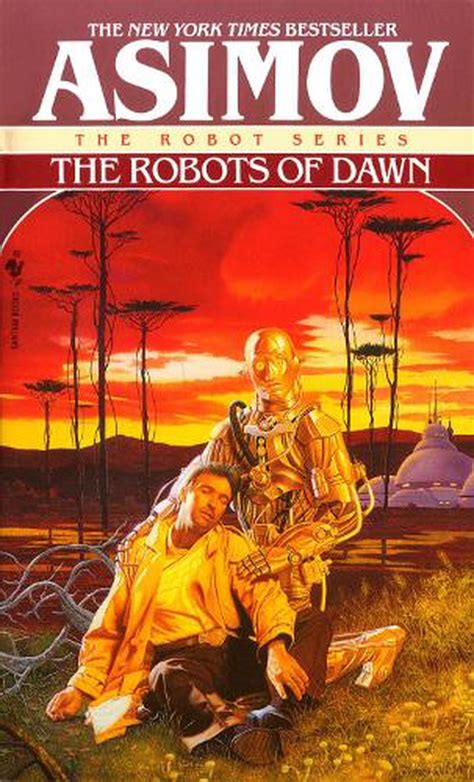
“The Robots of Dawn” is the last of a trilogy based on the adventures of detective Elijah Bailey of the NYPD, who is called to investigate crimes committed to or by Spacers (inhabitants of worlds colonized by “earthmen” centuries prior to the times of the events told in the books). In all his investigations, Bailey is assisted by a humaniform robot whose name is Daneel Olivaw. Daneel looks perfectly human but he is a robot so is limited by the three laws of robotics which are ingrained in his “positronic” brain. The three laws of robotics make sure that no harm can be done by any robot to a human. These books were written in the fifties and sixties but they are way ahead of his time. Truly a treat for those who are interested in science fiction.
I suggest that you read the trilogy in order: 1. The Caves of Steel (the investigation of murdered Spacer roboticist); 2. The Naked Sun (where Bailey investigates the murder of a prominent member of the planet Solaria); and 3. The Robots of Dawn (the investigation over the “death” of a humaniform robot on the planet Aurora)
3 – The Gap and The Gain by Benjamin Hardy and Dan Sullivan – Dan Sullivan is a new author who explores the concept of looking at things in reverse order. In this particular book, he mentions that Thomas Jefferson’s formula of “Life, Liberty, and the Pursuit of Happiness” makes happiness an unachievable ideal. He was wrong in measuring happiness against his ideals.
When you are pursuing happiness, then you’re measuring yourself against whatever you’re pursuing. The problem at the core of this is that happiness is not something you pursue. The reason is simple: ideals are not something you ever actually achieve because trying to achieve an ideal always puts you in the GAP. Ideals are like a horizon in the desert. They illuminate the path up ahead and give you direction for setting achievable and measurable targets. But like the horizon, the ideal itself is immeasurable, unreachable, and constantly moving.
Rather than measuring yourself against an ideal, there is a much better formula for happiness, confidence, and success: always measure backward. Look at the things you have gained and ensure that you acknowledge and celebrate the GAIN.
I found this book interesting and captivating with lots of exercises and real-life examples. I like exploring new authors who bring a different perspective to the discussion table.
4 – How To Be a Leader by Plutarch – A classic reading in all philosophy classes, this is a masterpiece on leadership that rivals contemporary and modern books on the subject.
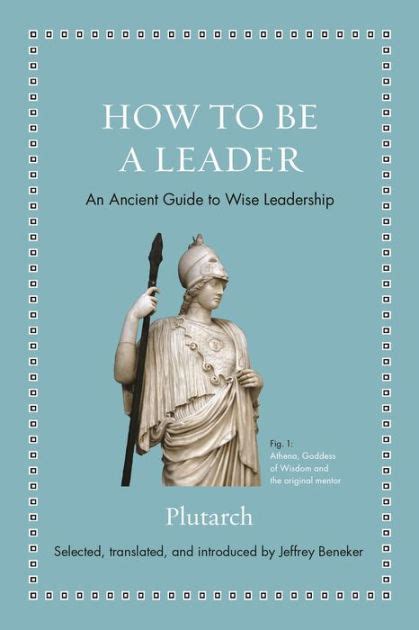
Should a leader really pay attention to her reputation? What’s the importance of communication? And which is better, a young leader or an old one? Drawing on the lives of some of the greatest figures of the ancient world, from Pericles to Archimedes, Plutarch sets out to answer these questions and more – offering up six enduring principles in leadership.
1) Lead for the right reasons – If you find yourself drawn to leadership roles, stop for a moment and consider your real motivations. The decision to lead should never be taken lightly.
2) A leader should be of impeccable character – Anyone who wants to lead needs to anticipate criticism, and avoid it. This isn’t an easy task. In fact, the only surefire way of doing that is to live spotlessly, putting yourself beyond the risk of scandal and condemnation.
3) Leaders should be able to speak eloquently and persuasively – Athens had no king. No Athenian possessed the power to command – and no Athenian was willing to follow orders blindly. Whoever wanted to lead Athens had to win over the Athenians. And whoever wanted to do that, needed to do one thing very well: speak.
4) Older leaders have a few unique strengths – the greater wisdom and maturity of older leaders is their greatest strength. Just as a crown marks out the authority of a king, gray hair signals that one is ready to be a leader!
5) Leaders should be guided by wisdom and reason – Plutarch’s conception of reason is grander and more powerful than our own. In fact, following Plato, he identified the principle of reason with God himself. Just as God rules the universe benevolently and in accordance with reason, Plutarch thought so too should leaders and governors care for the institutions and citizens that they oversee.
6) The attractions of work should keep older leaders engaged – Plutarch believed that a true leader could never fully disengage from public affairs.
If you want to lead, first make sure you’re doing it for the right reasons – not to satisfy your own ego. Then, polish your reputation, learn to argue well, and lead in accordance with reason. If you can do that, there’s no reason you shouldn’t remain a leader into old age.
5 – Less Doing, More Living by Ari Meisel – Finally, a book about regaining control over your life in an age that seems obsessed with productivity and immediate reward. Ari was diagnosed with Chron’s Disease after working almost 16 hours a day for many years. This was an epiphany for him and changed his life accordingly. In this book, Ari shares some principles that can help anyone regain a healthy life and bring balance into it.
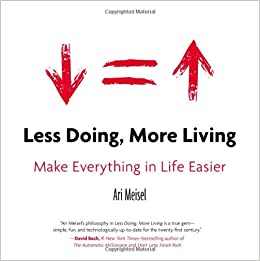
The main premise is that we all wish we had more time to spend on the things we love doing, whether that means being around our family or working on our hobbies. Yet, despite these wishes, time is something of which we never seem to have enough. Based on three central aims – Optimize, Automate and Outsource – the author informs you how to unleash waves of efficiency in everything you do, from organizing your finances to maintaining your health.
That’s it for this time. I look forward to sharing more on leadership, life advice, and all things related in the new year. In the meantime, have a blessed and joyous 2023!!
adf


 ASD Innovation
Leave a comment