

Marcus Aurelius, emperor of Rome, was well known for being a stoic. I have read his “Meditations” and many, nowadays, are practicing Stoicism – and Marcus Aurelius’ wisdom – to simplify their lives and find more flow and serenity “in the moment.” After all, mindful meditation, an inner way of exploring the now of life and its beauty, is nothing new.
Much has been written about “being in the moment” but in the last two to three years the insights have exponentially multiplied. Ryan Holiday, Greg McKeown, Benjamin Hardy, and Brianna Wiest are some of the authors that have written and that practice a higher sense of focus by living in the moment. The common thread of these authors, and a distinct element of Stoicism, is that a life well-lived is an essential, focused life that can be experienced only by immersing in the difference one can make “in the moment” he or she lives. The past is gone, and the future is yet to be. We only live in the now and so we need to make the best of it. That is how we make a true difference.
Good leaders understand this and do not linger in the past or fixate on the future because they know they have no control over both. What wise leaders do, instead, is to revisit the past to learn and move on and plan the future to understand what they need to do now to get there, knowing full well that this will have to be an exercise in patience.
But what is that helps leaders live and practice “being in the moment?”
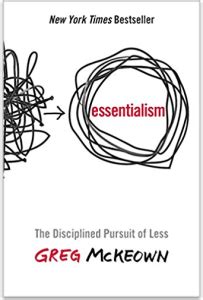
“Being in the moment” requires much inner reflection to separate the nonessentials in our life from the essential or, in other words, from what really counts (I recommend the book “Essentialism” by Greg McKeown on this topic). President Eisenhower used a matrix to make that separation. Such a matrix, which was later employed and made more popular by Stephen R. Covey, is divided into four quadrants based on what is important/not important and urgent/not urgent. While we tend to spend a lot of time on what we believe to be important and urgent (Quadrant 1), we fail to see that we condition ourselves to live in this quadrant/space because it makes us feel busy and productive. In reality, by constantly living in Quadrant 1, we create, whether consciously or unconsciously, a sense of crisis, which triggers anxiety, stress, and an embedded reactivity to all we do, and reaction is not good for sensible decision-making.
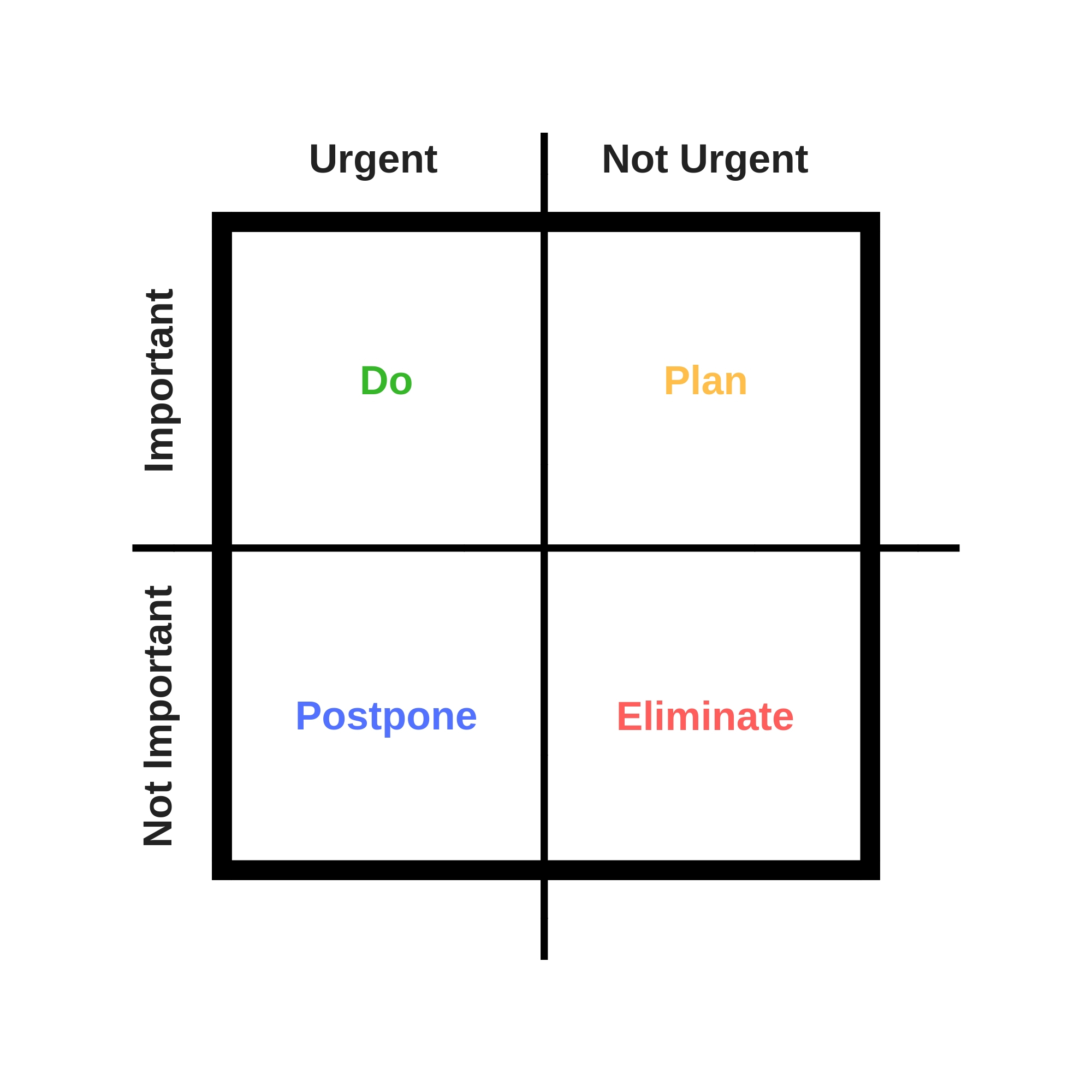
What Covey and Eisenhower suggest is spending more time (at least 25% of it) in Quadrant 2, which is the important but not urgent area. This is the quadrant of planning, preventing, strategizing, and renewal, just to cite four main components of this section of the matrix. The reason for this is that by doing so, we reduce the “crisis” mode that we find in Quadrant 1 because, by planning in advance and renewing ourselves, we become proactive and take more control over our life.
One thing we can do to enter and maintain a Quadrant 2 zone attitude coupled with a “being in the moment” philosophy is to create and maintain a routine.
The idea of routine can be frightening if you’re used to flexibility and choice. But, when it comes to leadership and productivity, routines allow you to stay focused on the important work that needs to get done and ignore distractions that come from making decisions about what you should do next. With the right routines in place, you can avoid wasting your valuable time on things that don’t matter and instead use your energy toward accomplishing your goals.
I have used routines in my life for decades and I soon discovered that routines bring a sense of control and, conversely, peace with them. Mostly, I have applied morning routines, but I am discovering the value of night routines as well.
Greg McKeown stated that “Routine is one of the most powerful tools for removing obstacles. Without routine, the pull of nonessential distractions will overpower us. But if we create a routine that enshrines the essentials, we will begin to execute them on autopilot. Our ability to execute the essential improves with practice, just like any other ability. There is another cognitive advantage to routine as well. Once the mental work shifts to the basal ganglia, mental space is fed up to concentrate on something new.” (Essentialism chapter 18 “Flow-The Genius of Routine). He goes on to suggest that not all routines are created equal and that we need to find the right routine for ourselves – one that makes us focus on the essential and does not keep us locked in nonessential habits.
Sharing my routine with my readers and collaborators also provides a platform for reflection and improvement. So, if you are looking for ideas to create the right routine, I suggest a combination of actions that are focused on three areas of your life: your body, your mind, and the roles you play in your life. Here are some suggestions.
Meditation and Prayer: I begin my morning routine with meditation and prayer. Offering myself to a higher Being and to my deepest inner self brings a sense of humility and respect for others that helps me in my daily interactions, including my family and friends. My experience is that I bring more value to those that interact with me by reflecting on myself and communing with God. Not everyone believes in a God so I suggest that you look within yourself and find that sense of connection that makes you appreciate not only yourself but also others around you.
Exercise: Exercise provides the body boost we need to begin the day with the right energy. It does not have to be a two-hour session at the gym. In fact, balance is also a part of living in the moment. Science has shown that 20 minutes of moderate exercise every day for six days a week, makes a huge difference in one’s life. I like walking and a 20 to 30-minute walk daily makes me feel good. In addition to the physical benefit, walking makes me feel connected with nature and my surroundings, which also makes me appreciate the environment I am surrounded by. It is a wonderful sensation.
Read: Books (good books) open minds and get the brain juices flow. Spending 20 minutes reading a book, pondering over what you read, and writing notes that you may refer to later or at some point is a powerful way of being ahead of the game. Read to expand your mind and knowledge. Read with a thinking eye and challenge your assumption in doing so. Read to share your learnings with others, especially those you care about. Reading in the morning gets you solidly grounded for the day.
Recently, I have also begun to use an evening routine. Why? I realized that I was spending too much time on an electronic device aiming at nothing, really. Then, in his book “The Gap and The Gain,” I read a routine that Dr. Benjamin Hardy uses at night before he falls asleep. He shuts down his electronic devices and ponders over the accomplishments of the day. Then he writes down what he calls the three wins of the day (in other words the three achievements that he feels have made a difference in his life that particular day) and takes the time to celebrate and cherish them in his mind. Then he writes down three important possible wins that he wishes to achieve the following day. That way, he is ready right in the morning to take on the day and focus on achieving, rather than spending too much time sulking on a possible future. He said, “When you take the time daily to recognize your achievements, you’re building a muscle.” I am doing this now and it feels very good. It helps me prepare but also feel good about what I have done in the day. It takes a bit of time to get three wins every single day. But even if you start with only one, it will make you feel great.
Now, routine is a periodical activity, in fact, possibly a daily activity (at least in my case it is). But we cannot have routines without the big picture. So take the time for planning and establish your big rocks – the objectives that will shape you into becoming who you want to be. Then build your routines around them.
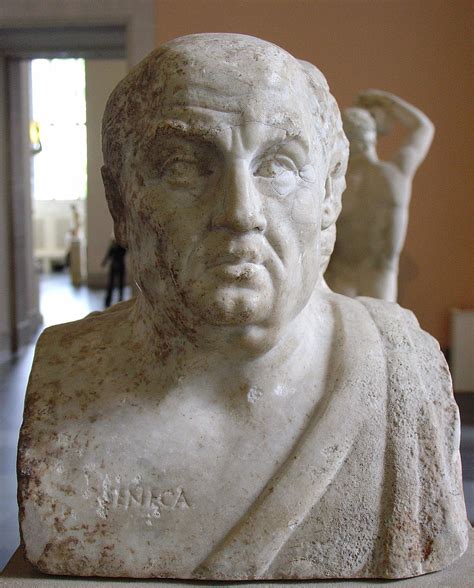
Finally, be wise about your expectations. The philosopher Seneca said it right when he stated, “No person has the power to have everything they want. It is in their power not to want what they don’t have, and to cheerfully put to good use what they do have.” By focusing on what is essential to us – what is truly meaningful to us – we will find a dimension and a state of being that will bring serenity even in the most difficult times.
Happy routines!
adf

 ASD Innovation
Leave a comment