
Have you ever felt ashamed but you knew it was not right feeling that way? I have. Throughout the years I have been “shamed” by people who wanted to have control over me and impose their will on me. I have learned to manage these situations through openness and vulnerability. I have also been fighting back when appropriate or found ways to change the situation.
In her work, Brenee Brown has focused on shame and vulnerability and provided great insight into the power of renouncing shame and embracing our imperfections. She is a skilled researcher and has written a number of wonderful books that I strongly suggest to all my friends. She is a great speaker and you can listen to some of her TED Talks on YouTube.
Today, I will share with you some insights of her book “Daring Greatly” and provide my personal perspective from what I learned as compared to my own experience. In this book, Brenee addresses the concepts of shame and vulnerability to make us aware of the contradictions we live on a daily basis.
We need to begin with the concept of shame. Shame, in a nutshell, is the fear of social disconnection. Like me, I am sure you have felt shame at times. Maybe you have done something you are not proud of and you know it, or fear rejection for who you are — you don’t fit within a certain group of people. Although this is only human, it is, after all, a harmful feeling. Often, we attach our self-worth to the way others respond to our creations or behaviour. The result? We fear we will be criticized, or, as I mentioned before, even rejected. Shame weakens our ability to believe we can improve ourselves. Much research has found that shame leads only to negative, destructive behaviour; in blunt terms, shame has zero positive effects. So, although it’s only human to feel shame once in a while, the adoption of shame-related behaviour in our society is worrying.
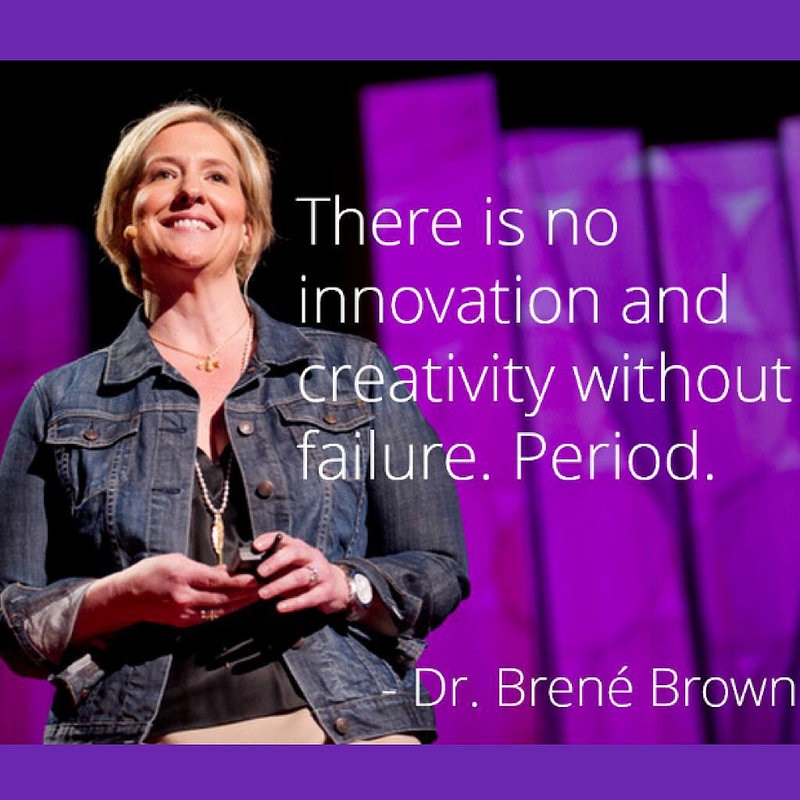
Think about it, shame has been and is part of our current culture and it promotes a fear of unworthiness – of never having or being enough. We’re constantly presenting ourselves and our lives to the public but we only share a rosy picture which is not realistic at all. This creates envy. Such envy often leads to a feeling of scarcity that we’ve all felt occasionally. We live in constant fear that we are not, or we don’t have, enough. When we cannot heal, rather than overcoming the trauma by processing it, which requires vulnerability, we try to numb the fear by seeking to acquire more things, and to be more. This never-enough thinking kickstarts a cycle of comparison, shame and disengagement. How do we overcome all this?
Brenee states that vulnerability is the core of all emotions and by no means a sign of weakness. We need to embrace it and make it a positive force in our life. We’ve been raised in a world where being vulnerable is associated with failure and disappointment, while success and strength are considered more important than connecting with our feelings. But if we analyze what vulnerability really is, then we arrive at entirely different conclusions.
First, being vulnerable simply means you have the capacity to experience emotions. In other words, vulnerability means uncertainty, risk and emotional exposure.
Second, allowing yourself to be vulnerable shows strength and courage —not weakness. It also means that we are courageous. In terms of our personal development, just as you’d appreciate others being open and honest with you, your vulnerability and willingness to share your feelings and thoughts will be received positively.
To live a shame-free life, we must learn to love ourselves unconditionally and to rely on our inherent worthiness when interacting with friends, family and colleagues. In doing so, we dare to be vulnerable because failure and rejection cannot diminish our sense of worthiness. By embracing our vulnerability, by putting ourselves out there and being engaged, we can establish deeper relationships with others and change our private and work lives for the better.

One of the things I can say from personal experience is that when I share how I feel makes me better and gives me a sense of liberation. Let me share a personal example. Many years ago I was having a personal issue (nothing serious for many people but very important to me) that, if unresolved, would have created a very difficult situation to my family. I was feeling trapped by my sense of pride and guilt. I was ashamed because I felt I was not living to the expectations my loved ones had placed in me. I finally decided that the shame and guilt was having an even worse effect on me and the situation and decided to share my problem and become vulnerable to the judgement of my loved ones. I only received love and understanding in return and realized that the issue was solvable and not a big issue after all. Often we are our worst enemy.
I truly recommend this book and others from Brene Brown. You will find great insight. It is easy to read and of great value.
Until next time!
adf
 ASD Innovation
Leave a comment