

After moving to Canada, I was surprised to find many restaurants claiming to be the real deal in Italian cuisine. Naively, my wife and I tried many of them in the hopes to find flavours and taste familiar to us – something we could call genuine. However, no matter what we tried or how close those flavours and taste may have been, they were never original. Take mozzarella cheese, for example. The Canadian version of it is a harder piece of cheese more similar to a provolone consistency with a more bland flavour though. Mozzarella in Italy is soft and full of delicious milk or cream. A few years ago, when my son was in Italy on a two-year church service stint, he was transferred to Battipaglia, near Naples. The city is famous for mozzarella made with buffalo milk. After his arrival, he sent us a video of him biting into one of those delicious, fresh, milk-juicy delicacies: he was in heaven and we were proud ( and envious) of him.
The list can go on, from extra virgin olive oil that is served bitter under the delusion that the taste of olive oil must be as bitter as some commercial olives for table consumption, to pizza dough and pasta sauce that are too rich to be called Italian.
My experience with the word genuine in leadership is that, nowadays, we attribute the title of leader too easily. Some may have the resemblance of being genuine, like the Canadian mozzarella or the local “imported” extra virgin olive oil, but they are far from it or they are a resemblance — maybe good enough but not exceptionally good.
The older I get, the more difficult it is for me to find the qualities of a genuine leader in many of them. I can certainly say that we have many good professionals but I don’t see many true good leaders.
Maybe I am over exaggerating, but I have been disappointed too many times and I hope to share some thoughts that can help all of us discover genuineness in people that are supposed to lead –and follow their example.
First of all, we don’t need a title to lead, but we need genuine leaders to occupy important positions of leadership. Too many times we fail to see beyond the definition that is placed after a name in a business card. Who is the real person that bears that name? If he or she has a Master in Business Administration, or a Doctorate in Political Science, or any other nomenclature of the kind, does this tell us whether this individual has what it takes to help others achieve a vision with related objectives and goals? Don’t get me wrong, I strongly believe in the value of education and I encourage all to get a university degree. But if we put more importance into a title rather than the character of a person, we risk to have deep disappointment on whatever expectation we are putting into that person: he or she may be good for a time, but if they do not have the right personality, vision, and passion, they will likely fail.
A genuine leader is one that is respectful of others and yet not a respecter of persons. The genuine leader sees through the appearances and evaluates possible outcomes based on the merits of the discussion. To a leader such as this, power is not important but influence is. It is not a case that some of the most influential people, who were leaders in their own right, never gained a position of power, and yet they are remembered today for their huge contribution to humanity. Gandhi comes to mind as a major example. His influence was more powerful than power to the point of losing his life. It reminds me of a definition that is found in a spiritual book: “We have learned by sad experience that it is the nature and disposition of almost all men, as soon as they get a little authority, as they suppose, they will immediately begin to exercise unrighteous dominion…No power or influence can or ought to be maintained…only by persuasion, by long-suffering, by gentleness and meekness, and by love unfeigned; by kindness, and pure knowledge, which shall greatly enlarge the soul without hypocrisy, and without guile.” (Doctrine & Covenants 121:39, 41-42)
Finally, a genuine leader is humble, recognizes his or her own mistakes and is not afraid to admit them. In other words, a genuine leader finds strength in vulnerability. I don’t know about you, but I have always looked up to those leaders that have shown humanity as one of their personality traits. When I moved to Canada, I found such a leader in Jack Copland, the first person that believed in my abilities in my new country of choice. He hired me despite the advise to the contrary from his boss. Jack was more than just a mentor. He gave me a better understanding of the true character of a leader. I will always be grateful to him for giving me the opportunity.
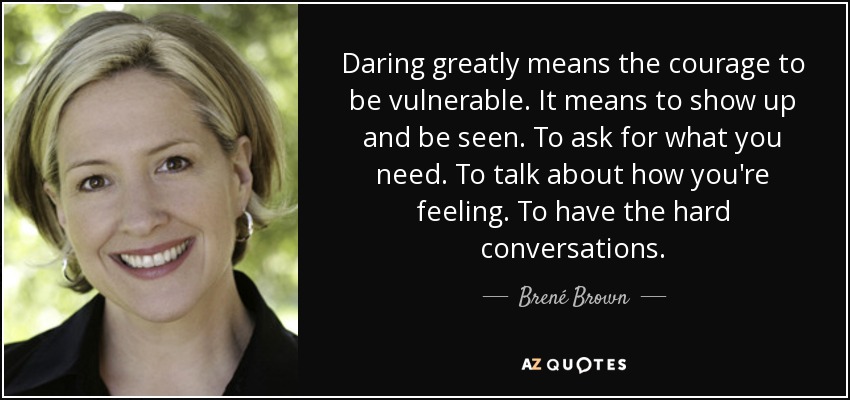
One of my favourite authors is Brenee Brown. In her book “Daring Greatly” she speaks of the culture of shame we live in in our society. Too often, she states, we attach our self-worth to the way others respond to our creations or ideas or points of view. The result? We fear we will be criticized, or even rejected. Shame weakens our ability to believe we can improve ourselves. Other researchers also have found that shame leads only to negative, destructive behaviour; in blunt terms, shame has zero positive effects. So, although it’s only human to feel shame once in a while, the adoption of shame-related behaviour in our society is worrying.
I felt that way in an organization I worked for. It was painful to feel that way just because someone thought too high of himself and too little of me, my culture, and “my accent.” But then, this taught me to act just the opposite and, by recognizing my weaknesses, I also learned to respect and value others and their contribution.
So, why do I like the mozzarella that is fresh, fluffy and juicy rather than the one that is cheaper and more commercialized? Because it tastes better, it is more satisfying, and it makes me feel happy.
Don’t we want the same from our leaders?
adf
 ASD Innovation
Leave a comment