
In the last few weeks we have tried to explain the budget to Lake Country citizens. It is not an easy task for us as we tend to use jargon to talk about what we do. It seems to be second nature, but we believe that everyone has a right to understand where the money goes and where the money comes from. Therefore, we are very thankful for the many positive comments on this series of articles. We are also very thankful for the feedback and questions that will help us to write more. This article will elaborate more on the previous article and I hope I can still make it simple.
WHERE DOES THE MUNICIPALITY’S MONEY COME FROM?
We call all our entries “Revenue” and they come from different sources. We have told you about property and parcel taxes, but they account for only approximately half of the revenue stream. There are also user charges and fees that individuals pay for specific services (to connect a water line to a house for instance, or to process a building permit application to name a couple); grants from other governments and agencies (most of these are attached to a specific project or program); developers contribution to infrastructure when they develop land in the community (we call this a development cost charge or DCC); and a few more. I will write about revenues in more detail next time, but this gives you an initial general idea.
WHAT IS THE AMOUNT OF THE PARCEL TAX FOR ROAD IMPROVEMENTS?
I live in the Chase Road area and I must drive Dick Road and Seaton Road to get to the office. It is a bumpy ride and it needs to be fixed. There are many roads in this condition throughout the community and they all need fixing at some point. We also have just over 200 kilometers of roads within our boundary and for Lake Country this is a massive network. We live in a vast area with a small tax base. It is an unfortunate reality. Transportation For Tomorrow is the main plan we have to address some of the infrastructure maintenance and renewal issues and it needs to be updated. It is high on our priority list and we are working to begin the process to update this plan in 2020.
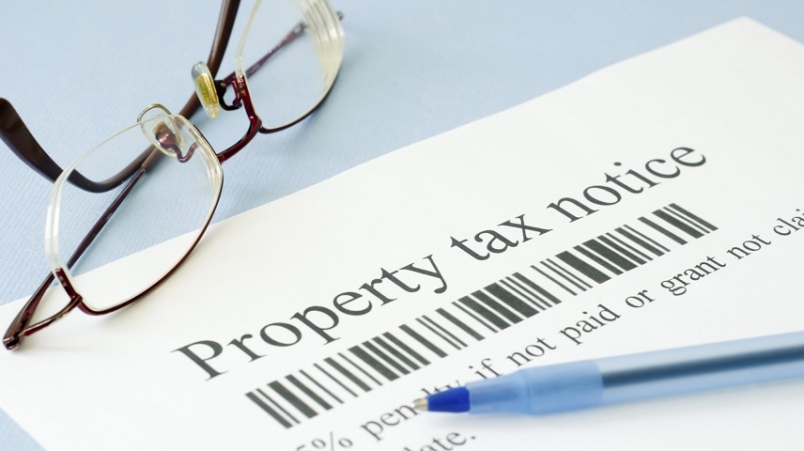
In the meantime, as mentioned in the previous article, the parcel tax for road improvements already exists and it was approved in 2016 after the Transportation For Tomorrow plan was approved and as part of its implementation plan. This parcel tax has remained the same since then and if you compare your property tax notices for the last four years, you will see a line item for this in the amount of $125. Watch for an article specifically on the roads and Transportation For Tomorrow in the next couple of weeks, but for now I wish to clarify that the parcel tax alone does not cover the costs for roads and transportation alone.
To be specific, there are 5,972 properties/parcels that paid $125 each in 2019 for a total of $746,500 in revenue from parcel tax. In addition, $481,459 was contributed in 2019 from property tax increases over the prior 3 years. This totals to $1,227,959. Of that amount, $1,093,533 went to the Road reserve to fund capital projects and the remaining was used to fund road maintenance operations. There was already funding allotted for operations prior to the Transportation For Tomorrow plan adoption. The $1.2 million is just what has been collected over that original basic operational funding.
A QUICK WORD ON GRANTS

All the grants we receive from other governments and agencies are attached to a specific purpose and can be used only for that purpose. Some grants are ongoing and guaranteed for a set number of years and some are awarded based on an application process for a specific project. For instance, a grant to build a water line cannot be used to cover for the maintenance and other operational costs of the water system. In this case they can be only used to pay for the costs associated with the development of that specific water line or we lose the grant.
The traffic fine revenue we receive in an ongoing annual grant (in 2019 it was approximately $79,000) can only be used to offset policing costs in the community (and only for that purpose).
Finally, there is a Small Community Protection Grant that we receive annually which goes into general revenue and offsets the general costs of operating the District. In 2019 it amounted to approximately $299,000. If we did not receive this grant either the taxes would be higher, or we would have to cut services as explained in one of my previous articles.
Stay tuned for more information in the weeks to come.
 ASD Innovation
Leave a comment