
A few years ago a great leader who I had met during my time as a missionary while serving in Pisa, Italy, told the audience how something his mom told him made such a great impact in his entire life: “Come what may and love it.” By living this principle, he found that he could accept the bad things in life with a better perspective and serenity. Nobody has ever said that life would be easy – a walk in the park, so to speak. But how we react to adversity definitely makes a difference between being or not being. (Joseph B. Wirthlin – “Come What May and Love It” – October 2008)
I have very recently learned this valuable lesson from a dearest friend of mine.
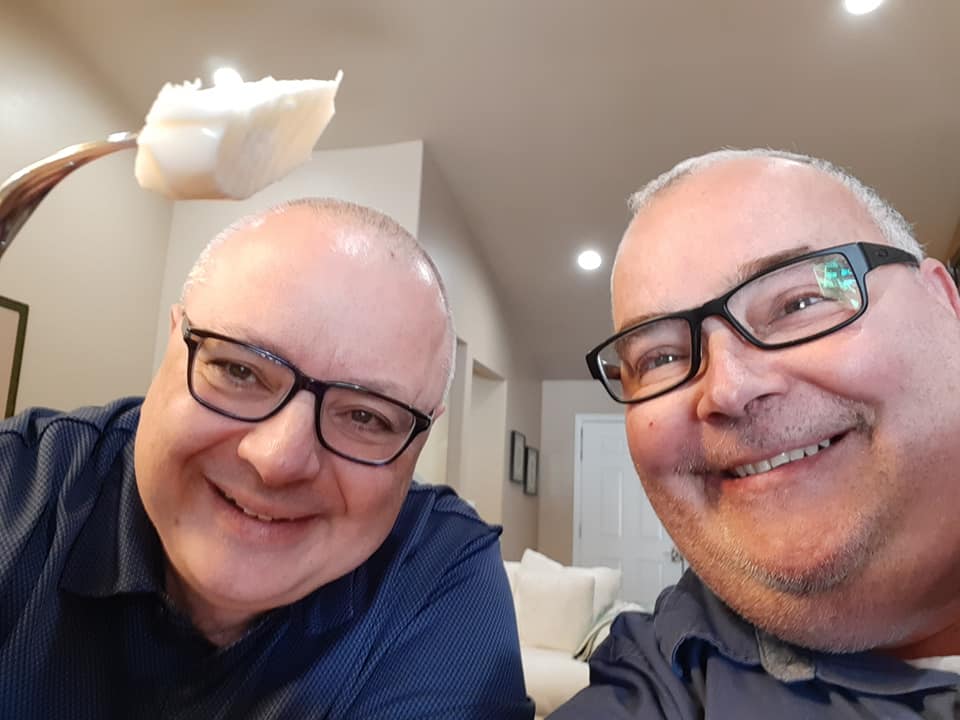
Gianni and I have known each other for 45 years. We grew up together. Even if I was a bit older than he was, we did things together until that time of life when you take your own path to adulthood. But we kept in touch, which has become much easier thanks to technology.
A few months ago, Gianni, who married Dawn and moved to the United States from Italy, found out that he had terminal cancer. I had the privilege to visit with him for a week at the beginning of October, just a month before he passed away.
Throughout the illness and last few weeks of his life, he and his wife Dawn, kept a positive outlook with an increased sense of compassion, love and appreciation for life and all the good things they had enjoyed together. Gianni told me: “I was born in the most beautiful town and in the most beautiful family. I have been blessed with a wonderful wife and family and I have the greatest job in the world. I have faith that all will be well with me and I trust in my Heavenly Father as He has trusted me all my life.” All people that know Gianni and Dawn were and continue to be touched by their example.
In all this I have asked myself: how would have I reacted to the news of my imminent mortality? Yes, I am a man of faith. But I am also a man. When confronted with the reality that the time is ticking inexorably towards the end, many of us do not take it well.
This experience with my friend Gianni taught me that I can confront my finality not just with faith but with what David Bednar described as “faith not to be healed”, an understanding that we need to trust in the process of life as something that is part of who we are. (David A. Bednar – “Accepting the Lord’s Will and Timing” – August 2016)
Not all those who read what I write, are religious or even spiritual. But I know they read what I write because they can find something that applies to them even if they do not agree with my beliefs. This is the beauty of honest communication.
I do believe that life goes on after this mortal experience but there is value in making this experience a better one, in fact the best we can make of it, by understanding that whatever comes our way does not have to be dramatic, depressing, sad, and upsetting. Challenges will come and finality will eventually reach us. It is what it is and we are better off by accepting it.
In my readings I have come across an interesting book by author Rene’ Brown. It is titled “The Gifts of Imperfection”.
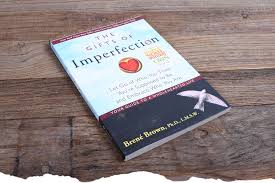
In this book, Dr. Brown explains that in her research she has found that those who truly live, are not afraid to be vulnerable and take ownership of their “weaknesses” to make them an asset. In this process, she identified three core values that make these people live a wholehearted life: courage, compassion and connection. She makes a point that the word courage derives from Latin and that the first part of the word in Latin “cor” means heart. You can’t have courage without heart.
I agree with her. In my life experience I have seen that I live better by accepting who I am rather than trying to fit into what others think I should be. I know I failed at that many times but I am slowly learning and getting better at it.
My friend Gianni and his wife Dawn seems to have learned it well. I hope to honor his memory by acting upon the lesson he taught me just before he died.
So long Gianni, ’til we meet again!


 ASD Innovation
Leave a comment