
As the senior leader of my corporation, I constantly look for opportunities to help all of my employees develop themselves both professionally and personally. In the spirit of a “Good to Great” culture, a concept introduced by author Jim Collins, which, in my organization, is based on four fundamental pillars – Values (including value for money, Standards (including excellent performance), Integration, and Technology – we holistically seek for better and best out of good trends and good readings, striving to create a unique environment where diversity and personal fulfillment go hand in hand with the ability to provide respectful working relationships within the workplace and with our citizens.
One of the successful vehicles for development we employee at the District of Lake Country is called “Learn to Work Week” which happens in September of every year. During this week there are a number of learning workshops and activities that see all of our staff engaged and involved. It is a great opportunity to ponder and reflect on our values and to regenerate, or even generate, fresh ideas that may help us better serve the public, and ourselves in our private lives as well.
As part of this event, I pick a book at the beginning of each year which is donated to all employees and council members to read in preparation of the “Week”. A specific workshop, with a keynote speaker, is held around the book. We have had some great reads over the last ten years including authors such as Stephen R. Covey, Robin Sharma, Liz Wiseman, Jim Collins, and others.
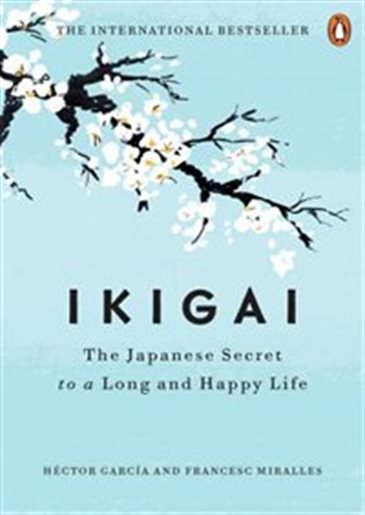
This year’s book is titled “Ikigai: The Japanese Secret to a Long and Happy Life” by Hector Garcia and Francesc Miralles. Ikigai is a Japanese word that can be translated as “meaning of life” or “reason for living” and represents some principles that, according to a number of studies over the last few decades, are at the basis of long and happy lives of people that live in Okinawa, Japan. Okinawa – and Sardinia, Italy – is the place with the highest concentration of centenaries in the world and through a thorough investigation of its inhabitants, it was discovered that people who live there proceed and obtain self-realization on the basis of personal maturity, the satisfaction of various desires, love and happiness, encounters with others, and a sense of the value of life. These actions and principles, and especially their own self-realization, which is the result of the application of those principles, help the people of Okinawa to live with purpose, with less stress, and with serene satisfaction for the simple things in life, especially the simple but full interactions with others, in particular their loved ones.
This concept is somewhat similar to the one introduced by Dr. Viktor Frankl in his well known book “Man’s Search for Meaning”. In his book, Frankl concludes that the meaning of life is found in every moment of living; life never ceases to have meaning, even in suffering and death. In a group therapy session during a mass fast inflicted on the concentration camp’s inmates where Frankl was a prisoner trying to protect an anonymous fellow inmate from fatal retribution by authorities, Frankl offered the thought that for everyone in a dire condition there is someone looking down, a friend, family member, or even God, who would expect not to be disappointed. Frankl concludes from his experience that a prisoner’s psychological reactions are not solely the result of the conditions of his life, but also from the freedom of choice he always has even in severe suffering. The inner hold a prisoner has on his spiritual self relies on having a hope in the future, and that once a prisoner loses that hope, he is doomed.

The Ikigai philosophy, however, has a more positive connotation. It encourages individuals to discover the intersection, or core, of the four foundational questions and principles: 1) what we love (our mission); 2) what the world needs (our vocation); 3) what we can be paid for (our profession); and 4) what we are good at (our passion). In reading this book, we may find out that by discovering our mission, our true vocation, our professional aspiration, and our inner passion, we may finally understand the path to a peace of mind that could be transformational.
Have a good read!
adf


 ASD Innovation
Leave a comment